RETAIL & CLUB STORE PACKAGING
Will Your Club Store Display Tray Work When It’s Half Empty?
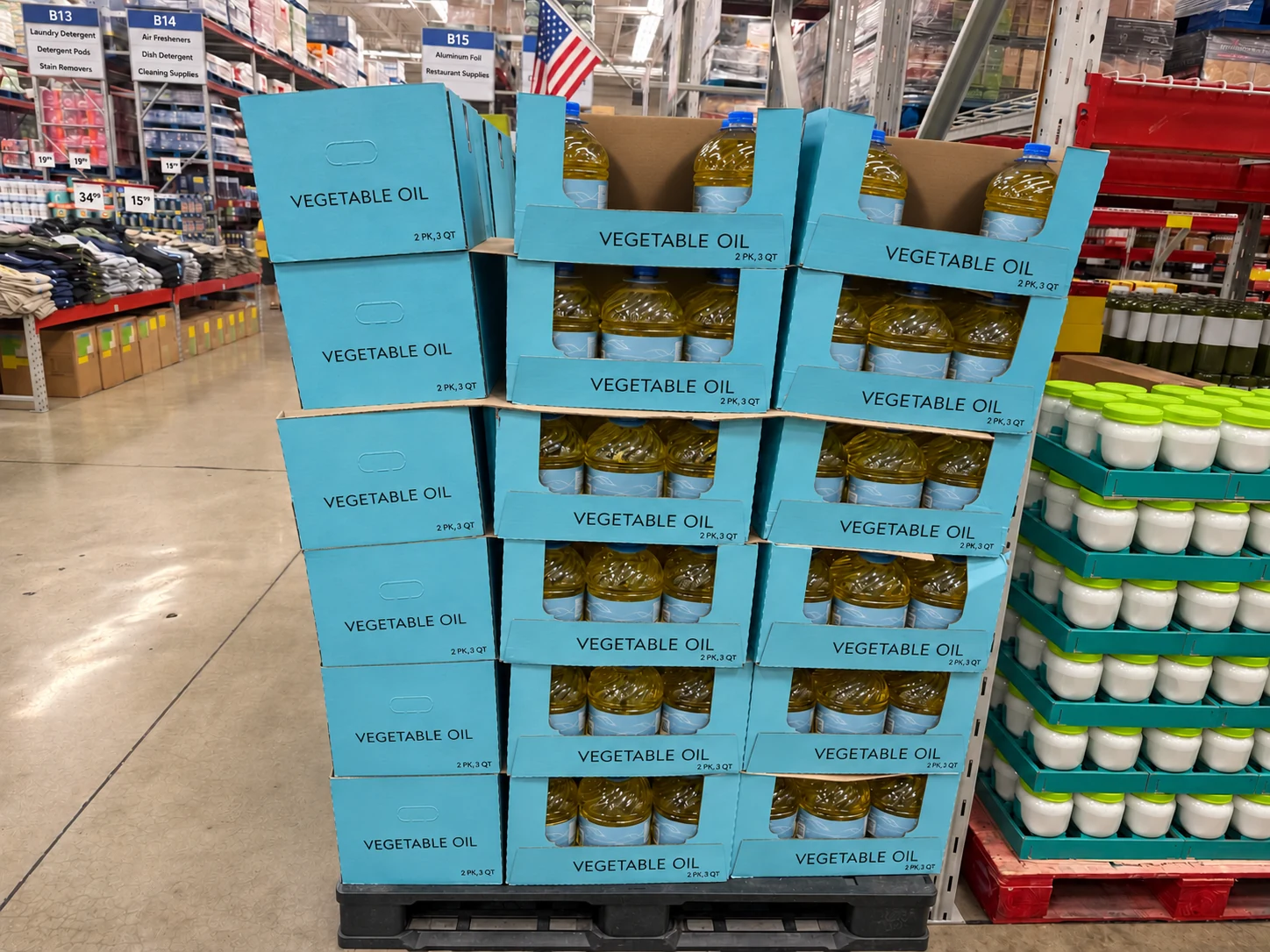
A full club store display can hide a lot. Tall bottles stand shoulder to shoulder, the rows look straight, and every label faces forward. Pull out three bottles from the same corner and see what the tray is doing on its own.
That’s the check I’d add before approving a corrugated display tray for a club store program. Use the actual filled product and the proposed tray. Start full, shop it down unevenly, and watch what happens to the units that are left.
Shop the tray the way customers will
Start by taking a unit from the front. Then take a few more from the same side. Reach for one in the back. Put one back slightly out of position. Leave a single unit near a corner. A display that looks fine at half capacity can behave differently depending on which half is missing.
With tall bottles, pay attention to the first unit that leans into an open space. Can you still lift the next bottle out cleanly? Does the front lip catch it? Does the tray shift as you pull? Does the last bottle stay upright and easy to reach?
Take photos at each stage. A picture of the first lean is often more useful in a design review than another picture of the full pallet.
Change the detail that caused the problem
| What you see | What to check |
|---|---|
| Bottles lean into a gap as a row clears | Check the fit around the bottle bases and whether a divider would support the remaining units. |
| The front lip catches the bottle on removal | Try a different lip height or cutout, then check whether the tray still retains product. |
| The front corner opens or bows | Check the corner construction and how it was assembled before changing board grade. |
| The last unit is hard to reach | Check tray depth and clearance above the tray in the planned display configuration. |
A tray change can fix one issue and introduce another. Check the revised design with a full tray, an unevenly shopped tray, and the last few units still in place.
Review the tray on the pallet, too
If the display will ship as a pallet, review the filled trays in the intended pallet pattern and confirm the applicable retailer requirements. The shop-down check tells you what happens as people remove product. Transit testing evaluates the package against the handling and distribution conditions it will face on the way there. ISTA design and testing guidance
If you’re developing a club store display for bottles, jars, or multipacks, send Packaging Upgraded your product dimensions, filled weight, units per tray, and proposed pallet layout. We can review the tray and the full pack-out with you before you commit to a production run. See our club store cleaning solution display project · Discuss your display project