FLEXIBLE PACKAGING & PROCUREMENT
How to Compare Rollstock Quotes: What Does Each Finished Bag Actually Cost?
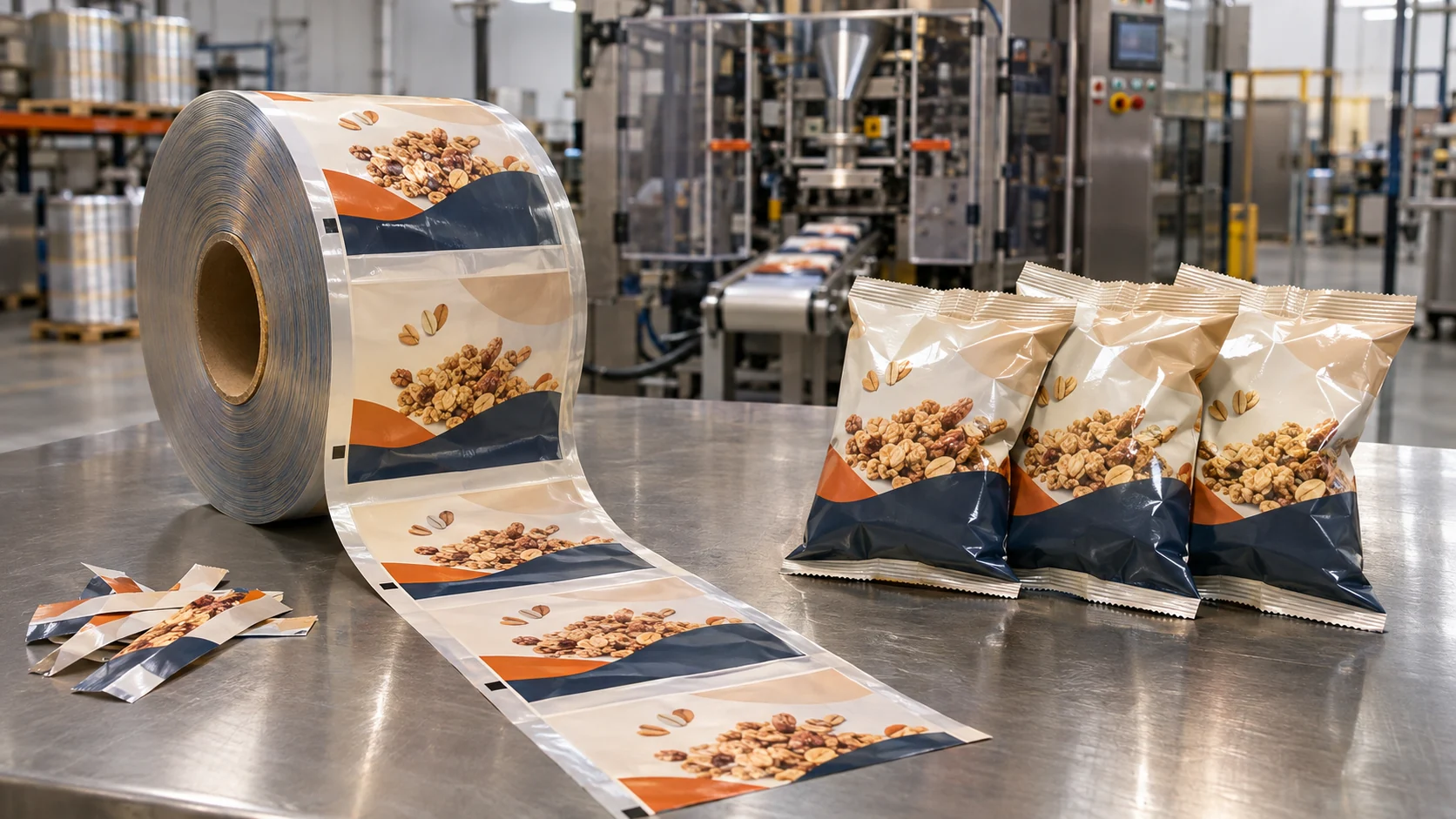
The film quote came in lower. Then production got involved.
That is when a price comparison can turn into a different conversation: How many bags did the material actually produce? How much went into the scrap bin? What did it take to get the line running?
To compare rollstock quotes, first confirm that suppliers are pricing the same package requirements and purchase quantities. Convert each quote to the same theoretical bag count, then use production-trial results to calculate film cost per acceptable finished bag.
For co-packers, manufacturers and CPG brands, that connects the purchase price to what the line actually produces. A lower quote can be a good buy. The comparison needs to show whether the saving survives production.
Start your rollstock quote comparison with the same requirements
A price per pound, per roll or per thousand impressions needs context.
Give both suppliers the same brief. Ask them to identify any proposed departure from the current specification rather than burying the difference in the price.
| RFQ detail | What to confirm |
|---|---|
| Product and protection | Fill conditions, storage environment, required shelf life and approved barrier requirements |
| Material | Film structure, thickness and agreed tolerances |
| Package geometry | Web width, cut-off length and packages across the web |
| Roll and machine fit | Core size, maximum roll diameter and weight, unwind direction and registration requirements |
| Printing | Artwork revision, number of designs, print method and separately charged tooling |
| Commercial terms | Order quantity by SKU, delivery location, freight, releases and quantity tolerances |
If a supplier proposes a different structure, compare its qualification requirements as well as its price. Similar-looking films are not automatically interchangeable.
Roastar’s rollstock specifications explain the relationship between web width, repeat length and impression dimensions. These details help define what the supplier is pricing.
Ask each supplier to state the expected footage and package count for the quoted quantity, including the assumptions behind that calculation. For a multi-lane layout, confirm how many packages are produced across the web and how the supplier defines an impression.
Do not assume “100,000 impressions” means 100,000 finished bags without checking the layout.
Convert price per pound or roll into a comparable bag count
Two film options can differ in weight per unit area. That means the same purchased weight may represent different lengths of film and different theoretical package counts.
Ask for the yield basis behind a weight-based quote. With the same web width and package cut-off, the available length helps determine how many package positions you are buying.
Then separate theoretical package count from acceptable finished bags.
The theoretical count describes the material before production losses. The acceptable count is what remains after startup waste, rejected packages and other recorded losses.
A lighter structure still needs to meet the product’s protection requirements and run successfully. Emmerson’s rollstock guidance identifies equipment, barrier needs, print requirements and end-use conditions as considerations in selecting a structure.
Calculate film cost per acceptable finished bag
Use this calculation for the material portion of the comparison:
Film cost per acceptable bag = film cost allocated to the run ÷ acceptable bags produced
Here is a hypothetical example. These are invented numbers to demonstrate the calculation, not supplier performance data or a customer result.
| Comparison | Film A | Film B |
|---|---|---|
| Film cost allocated to the run | $4,500 | $4,800 |
| Theoretical package count | 100,000 | 100,000 |
| Acceptable finished bags | 90,000 | 98,000 |
| Film cost per acceptable bag | 5.00¢ | 4.90¢ |
| Film cost per 1,000 acceptable bags | $50.00 | $48.98 |
Film A costs $300 less to purchase. In this example, Film B has the lower film cost per acceptable bag because it produces more usable output.
The output figures are illustrative, not industry scrap benchmarks. Costs are rounded. Use your measured results, and include the cost of material that became scrap. Exclude unused film that remains available for another run.
This table compares film cost only. It does not establish which option has the lower total production cost or prove that the film caused the difference in output.
If yield and other costs were equal, the lower purchase price would remain the better material-cost result.
Include Setup, Scrap, and Other Costs
Film cost per bag is a starting point. A fuller purchasing review should also identify:
- Freight and any separately charged printing or setup costs.
- Trial and qualification expenses.
- Additional labor or machine time.
- Documented product lost in rejected packs.
- Minimum orders, release quantities and inventory commitments.
Use the same accounting basis for both options. Separate recurring costs from one-time charges, and show how any one-time amount is allocated across the expected volume.
Keep machine time and labor costs separate from material cost until you build the total. That makes the comparison easier to check and helps avoid counting the same expense twice.
Use a machine trial to check the quote assumptions
A good trial needs an agreed question and a record of the conditions.
Roastar offers trial rolls for testing material and artwork on a buyer’s equipment before a full order. That supports a practical purchasing step: check the proposed film on the intended line before treating it as an approved replacement.
Before the run, agree on the required seal, appearance and product-protection checks with production and quality. Confirm what the trial can establish and what still requires shelf-life or other qualification work.
Record the machine, SKU, material lot, setup, input quantity, run time, scrap and acceptable output. Separate startup losses from losses during steady running. Compare similar run lengths and conditions so a short trial is not mistaken for a full production forecast.
For a business with several facilities, identify which lines have been qualified. Approval at one plant should not silently become approval for every machine in the network.
Investigate differences before assigning a cause. A difficult run can involve material, equipment condition, settings, product conditions or several factors together.
Reviewing a high-volume rollstock program? Put us to work.
At Packaging Upgraded, we supply flexible packaging and form-fill-seal rollstock for businesses across the USA.
If you are reviewing a film program, send us your current specification, package dimensions, equipment information, estimated annual usage and delivery locations. Tell us what needs to improve: price, supply, waste or performance on the line. If several plants use the film, include the machines and facilities involved.
We can work through the sourcing requirements with you and identify the information needed for a useful comparison. If the starting specifications need attention, begin with a packaging evaluation.
Discuss your rollstock project or email sales@packagingupgraded.com.
The question is simple: what does the film cost by the time you have a bag you can ship?
If your line fills pre-made bags, compare quotes for finished printed pouches by format, closure, and quantity per SKU.
Related: Lidding film and form-fill-seal packaging materials.