RETAIL & CLUB STORE PACKAGING
The packaging has to survive the customer, too.
Is this a packaging problem or a customer problem?
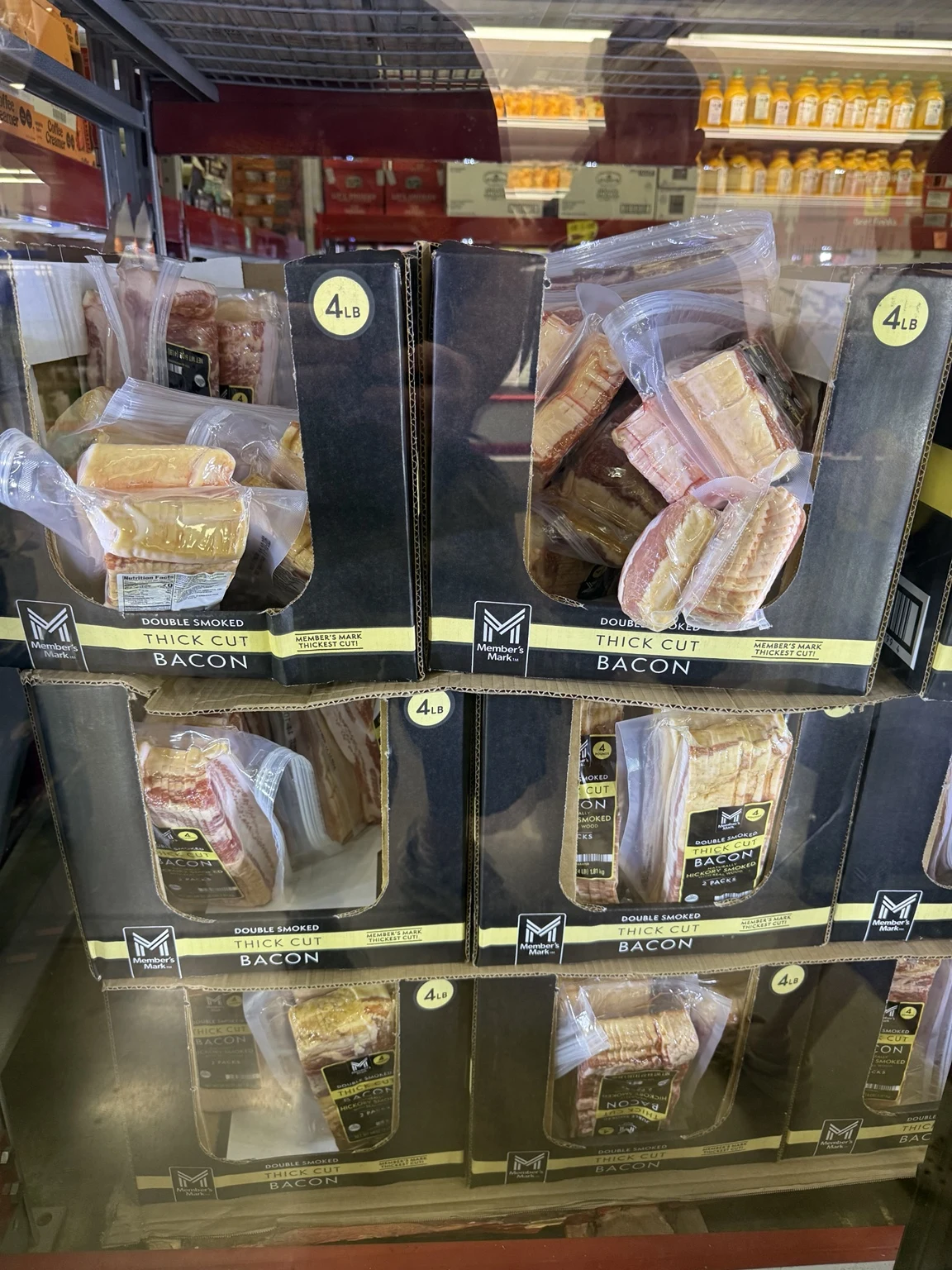
I saw this bacon display at Sam’s Club and had to take a picture. Packs were sitting at different angles, with some leaning out of the front of the cases.
It’s easy to look at that and blame the customers. People pick up a pack, look for another one, and put the first one back wherever it fits. But in a club store, shoppers sorting through a display shouldn’t be a surprise.
Retail-ready packaging still has a job on the shelf.
A retail-ready package still has work to do after it arrives at the store. People need to reach the product, compare packs, and sometimes put one back. As the display empties, the remaining products need to be considered too.
This photo shows the condition of one display at one moment. It doesn’t tell us exactly how it got that way, whether it was stocked correctly, or how the original design was tested. Those are questions to ask before deciding what should change.
What to Check in a Retail Display
For a similar packaging review, we’d want to see how the filled packs fit, how shoppers reach them, and what happens as products are removed. Front opening, side support, pack orientation, and replenishment are all worth discussing alongside shipping and stacking requirements.
Making the tray stronger might be one option. Changing how people access the product might be another. The right answer starts with understanding what’s happening in the store.
If your display looks good when it’s stocked but becomes difficult to shop, what could the packaging do differently?
That’s the question I put to my LinkedIn audience. You can read the original post and join the discussion below.
Read the Post on LinkedIn ↗For CPG teams planning a repeat retail program, record those observations alongside the retailer requirements and approved pack-out. A packaging performance evaluation can look at product access and distribution needs together.