THERMOFORMED PACKAGING & PROCUREMENT
Thermoformed Packaging: Retail Blister Packs and Industrial Trays
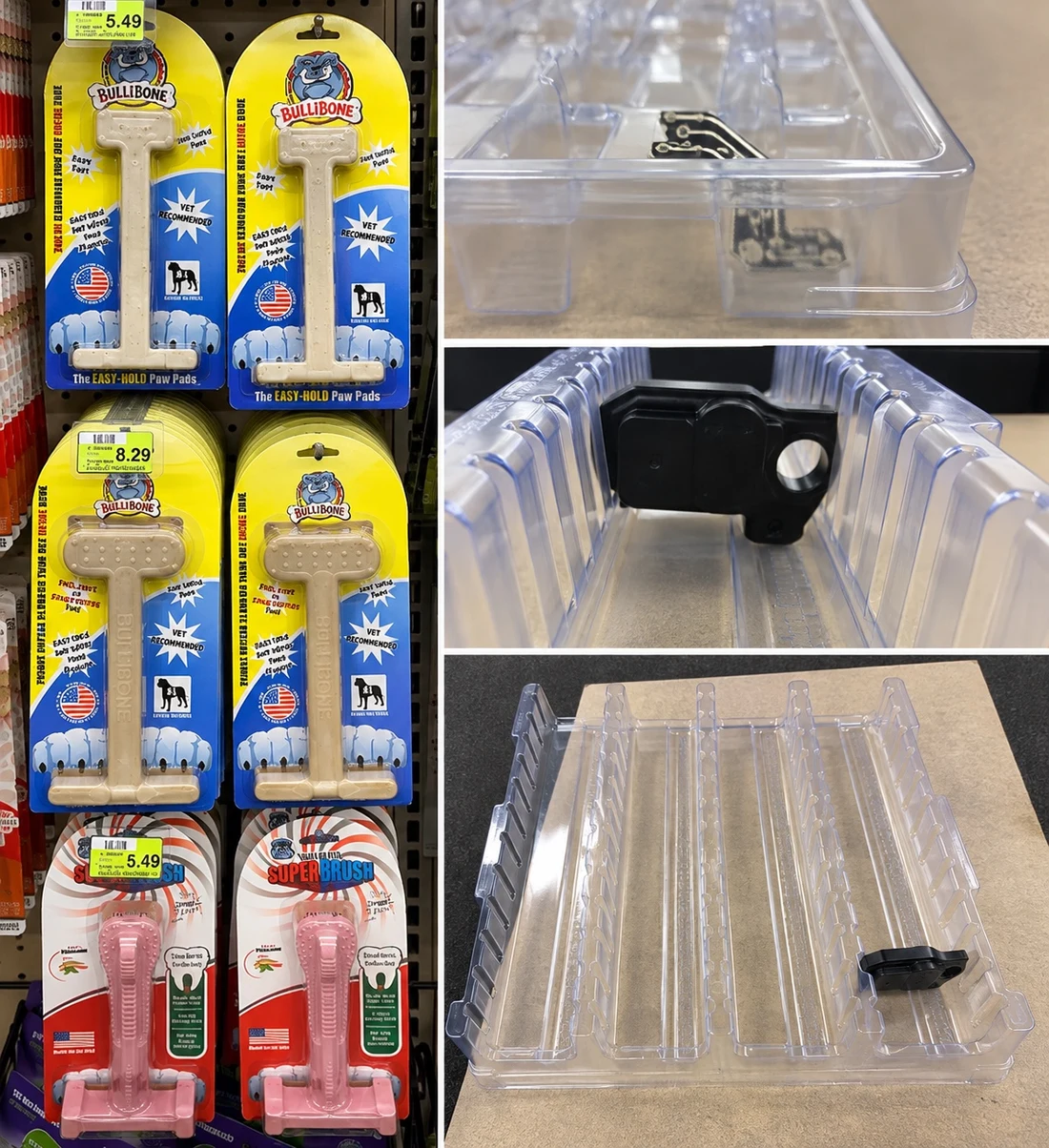
A dog chew needs to stay in place and be easy to see on a store rack. A manufactured component needs to stay in position inside a shipping case. Both can use thermoformed packaging, which starts with a heated plastic sheet shaped against a mold.
Retail blister packaging has to hold and display the product
Packaging Upgraded supplies the retail blister packaging shown here for Bullibone dog chews. The formed blister holds the chew in position while the card carries the graphics and provides a hang hole. When reviewing a blister design, check fit with the actual product, how the blister attaches to the card, and how the finished pack hangs and ships.
Custom thermoformed trays give components a defined position
The industrial tray images show concepts we developed for evaluation. Each component has a designated position to help limit movement and part-to-part contact during handling and shipping. Start by identifying where the tray can safely support the part, which surfaces need clearance, and how operators will load and remove it. Then check the loaded tray inside the intended shipping case.
What to include in a thermoformed packaging RFQ
At recurring volumes, material, tray design, and tooling can all affect what you pay. Give each supplier the same requirements so you can compare quotes on the same basis.
- Product and fit. Share drawings or samples, dimensions and tolerances, and any surfaces that need protection.
- Packing and distribution. Explain how the part is loaded or displayed, how many units go in each case, and what handling conditions the package will see.
- Material and validation. Ask suppliers to identify the proposed starting sheet thickness and how they will verify fit and support on formed samples. The finished wall thickness can vary with the shape and depth of the draw.
- Tooling and supply. Share estimated annual usage by SKU, release quantities and delivery locations. Ask suppliers to separate tooling charges from recurring unit pricing and clarify tool ownership.
For more on how forming depth and part geometry affect wall thickness, see Multifab’s thermoforming design guidelines.
Planning a blister pack or component tray?
Share what needs to fit, where the package will be used, and how many units you expect to buy. We can help define the requirements for a usable quote and ongoing supply.
Request a Thermoformed Packaging Quote
Explore industrial component packaging · Read the original LinkedIn post